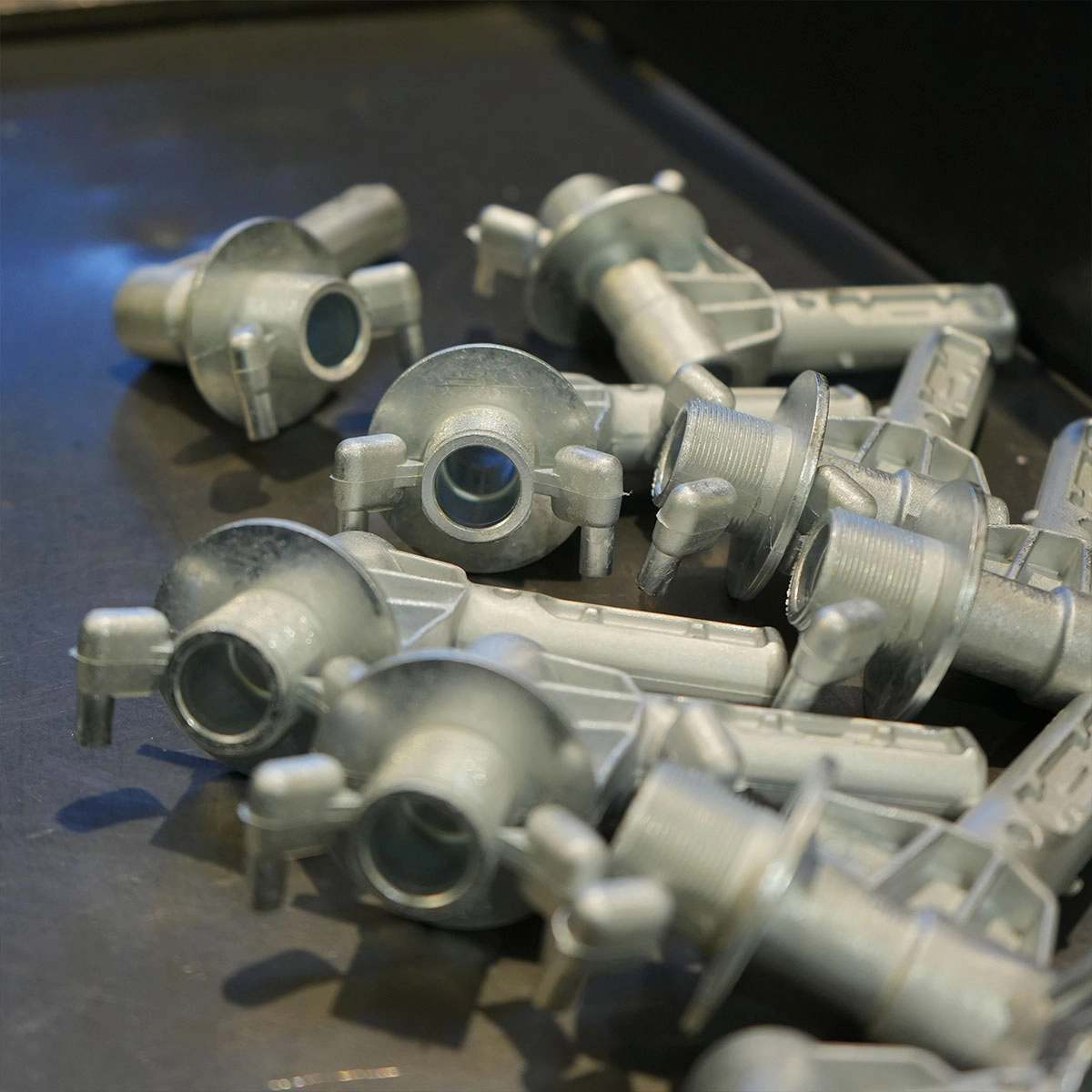
The origin of Zamak
Zamak first appeared in the 1920s, when it was developed in the United States by the New Jersey Zinc Company. Although the material originated in the US, its name is of German origin: it is an acronym for Zink (zinc), Aluminium (aluminum), Magnesium (magnesium), and Kupfer (copper), the four metals that make up the alloy. The company patented the first formula in 1926 under the name Zamak 1, and in the following years registered new variants—Zamak 2, 3, 5, 7, and 8—which expanded its use in industry.
Shortly afterwards, in the 1930s, the alloy crossed the Atlantic: the British company Morris Ashby obtained the license to manufacture it in the United Kingdom. Since the very high purity zinc used in the United States was not available there, they adapted the process with locally refined zinc and baptized this variant “Mazak“, combining the original name with the initials of its founder.

Its Take-Off in the Industry
Throughout the 1930s and 1940s, the industry rapidly adopted zamak. In the automotive and appliance sector, it began to be used in the manufacture of parts such as buttons, locks and other small parts.
Manufacturers of all types began to replace more expensive and difficult-to-work materials with this new alloy, which accelerated its presence in increasingly larger production lines. As die-casting technology advanced, zamak also gained ground in the automotive industry, in parts subjected to intensive use.
Its importance in World War II
During the Second World War, zamak was key in the production of war material. Due to the scarcity of other metals, it was used to make parts for airplanes, vehicles and ammunition. Its ease of manufacture made it possible to produce large quantities of pieces for the army, at a time when speed of production was as important as the materials themselves.
This massive use during the conflict helped consolidate zamak as a reference material in the industry, a position it would maintain in the following decades.
The Post-War Period and its Expansion
After the war, zamak expanded even further in industry. In the 1950s and 1960s, the automotive industry adopted it to manufacture emblems, handles, and other accessories, taking advantage of its ability to reproduce fine details in molding.
The use of zamak also extended to the production of household appliances, toys and jewelry, replacing more expensive metals at a time of strong growth in industrial and domestic consumption in Europe and the United States.
Its Role in Modern Industry
Today, zamak remains one of the most widely used alloys in die casting, almost a century after its invention. Its historical journey — from the workshops of the New Jersey Zinc Company to today’s automated production lines — explains why it continues to be a reference in sectors such as automotive, electronics and locksmithing.
If you want to learn more about what zamak is, its technical properties and its current applications, you can consult our zamak technical properties page.

Conclusion
From its invention in the United States in the 1920s to its international expansion, through its role in World War II and its consolidation in postwar industry, zamak has spanned almost a century of industrial history. A story that continues to be written today in foundries like ours.