Table of contents
What is Zamak Casting and Injection?
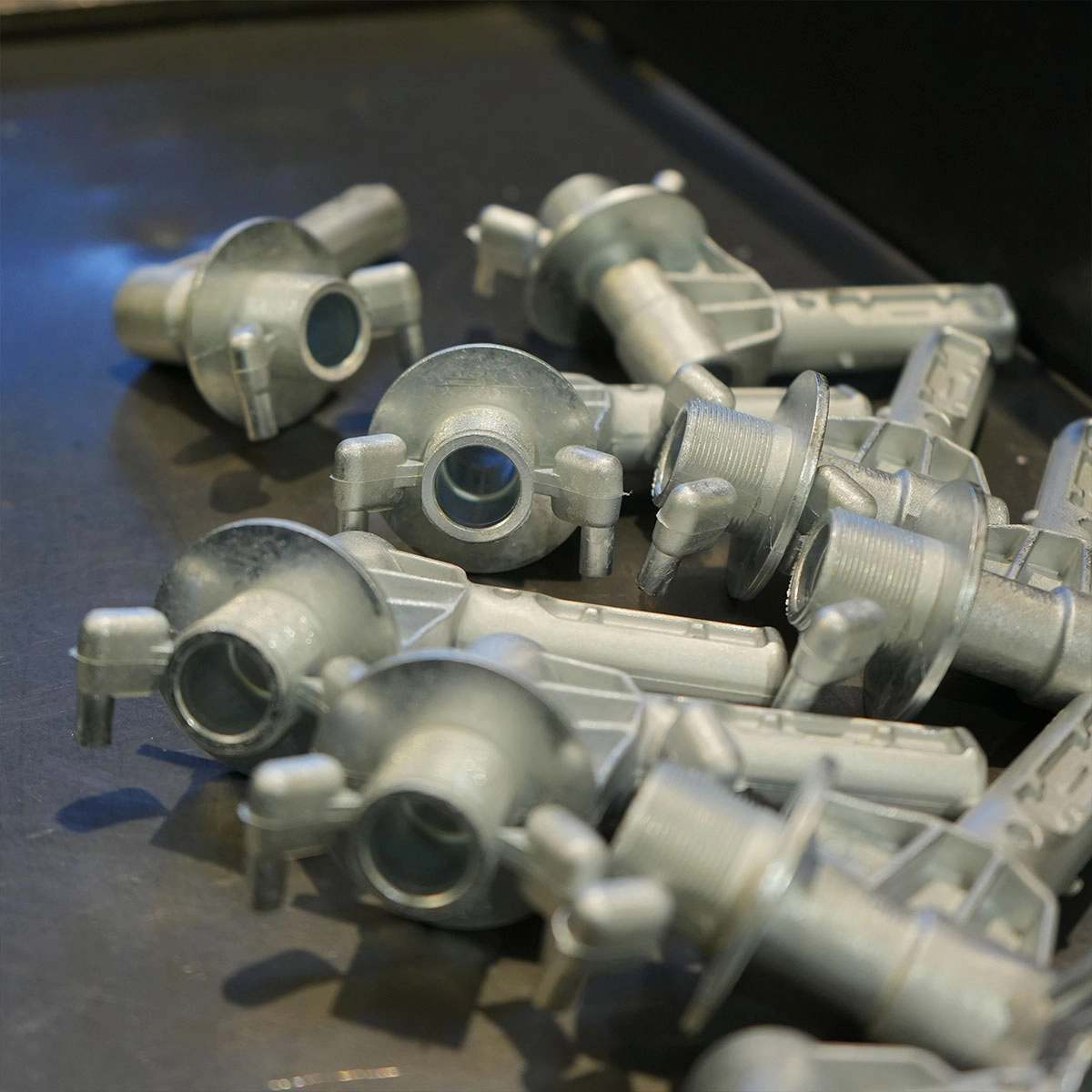
Zamak casting is a fundamental process in a number of industries thanks to the versatile properties of this alloy. Composed primarily of zinc, aluminium, magnesium and copper, Zamak has proven to be a high-performance material in terms of both durability and precision. Below, we take a deeper look at what makes this process so effective, the advantages it offers, and how it is revolutionising sectors such as automotive, appliance manufacturing and product design.
Zamak Injection Process
Zamak injection is the central technique within die casting: it consists of melting the alloy at a relatively low temperature (between 380 °C and 390 °C) and injecting it at high pressure into a steel mold using a piston.
The process unfolds in three phases:
- Melting: Zamak is heated until it reaches its melting point, maintaining precise temperature control to guarantee the quality of the molten material.
- Injection: liquid metal is introduced into the mold cavity at high speed and pressure, allowing complex geometries to be reproduced with very tight tolerances.
- Solidification and extraction: the piece cools inside the mold in a matter of seconds —thanks to the low melting point of zamak— before being extracted, ready for further finishing if necessary.
This fast cycle time is one of the main advantages of zamak compared to other alloys: it allows the manufacture of large volumes of parts with more controlled production costs and without sacrificing precision.
A material with almost a century of history
Zamak was developed in the 1920s by the New Jersey Zinc Company in the United States. The new creation responds to the need for a material with better mechanical behavior than pure zinc, but which maintains the ease of use. From scratch, zamak has evolved to become one of the most widely used tools in pressure injection processes.
The popularity of zamak in the manufacturing industry is due to its six unique properties: its ability to be modeled into complex shapes, its excellent cost-benefit ratio and its high corrosion resistance. In particular, it is valued in sectors that require robust but lightweight products, such as the automotive, electronic and accessory design sectors.
Types of Zamak and Their Differences
There are different types of zamak, each of them optimized for certain applications and casting processes. Among the most common variants are:
- Zamak 2: With a higher copper content, it is the strongest and most resistant variant, although less used than other types due to its higher cost.
- Zamak 3: It is the most common and used, thanks to its excellent balance between resistance, ductility and ease of casting.
- Zamak 5: Similar to Zamak 3, but with greater impact resistance and hardness, making it ideal for parts exposed to high stresses.
- Zamak 7: It is a refined version of Zamak 3, with greater fluidity during the casting process, which allows for more precise finishes.
Each of these types offers specific advantages depending on the use and work environment, and it is essential to select the right one to maximize efficiency in production processes.
Advanced Methods and Techniques
Zamak casting can be carried out using various methods, depending on the characteristics of the piece to be produced. The two most commonly used methods are:
- Die casting: This is the most common process and involves injecting molten zamak at high pressure into steel moulds. This method is notable for its speed and precision, as it allows parts to be manufactured in large volumes with very tight tolerances. Hot chamber die casting is particularly effective for zamak, as the alloy has a low melting point.
- Gravity casting: Unlike die casting, this method uses gravity to fill the molds, rather than applying pressure. It is used less frequently, but is useful for producing larger parts or those with less demanding precision requirements.
Innovations in Zamak Foundry
In recent years, technology in zamak casting processes has evolved with the introduction of more advanced injection machines, capable of controlling casting parameters with great precision. This has resulted in products with better surface finishes, reducing or eliminating the need for additional treatments, such as polishing or electroplating.
Conclusion
Zamak casting will continue to be a crucial choice in the manufacturing industry due to its versatility, low cost and excellent performance. Continuous technological improvements in casting processes and finishing methods ensure that Zamak will remain competitive against other metal alloys. Whether in the manufacture of automotive components, electronic parts or decorative accessories, Zamak continues to prove its value as a multi-functional material.
Request your quote with no obligation
Call or write to us and connect with our team of zamak casting and injection specialists.
We’ll analyze your idea and propose the best, customized solution, with no obligation.