Table of contents
The Evolution of Industrial Mold and Tool Design
The manufacturing industry has undergone significant transformations in recent decades thanks to technological advances. One of the most striking aspects of this evolution has been the design and manufacture of industrial molds and tools, especially in such crucial processes as die casting. These advances have not only improved precision and efficiency, but have also enabled the creation of more complex and functional parts for various industries, such as automotive, aeronautics, electronics, and construction.
Industrial Mold Design
Industrial mold manufacturing has evolved significantly over the years. In the beginning, molds were made by hand, which took a lot of time and effort. Today, technology has made the process much faster, more precise, and more economical. Some of the most notable innovations include:
3D Modeling and Computer Simulation (CAD/CAE)
3D modeling and simulation software (CAD and CAE) has revolutionized mold design. These tools allow molds to be created with great precision and simulate the behavior of the material inside the mold before production. This minimizes errors and reduces costs, improving the quality of the final product.3D Printing and Rapid Prototyping
3D printing has transformed prototype development. Thanks to this technology, it is possible to create high-precision three-dimensional models in a short time. This speeds up the design process and facilitates testing before mass production, improving quality and reducing development time. In addition, 3D printing has made it possible to manufacture molds for small-scale production, which is ideal for customized products.Advanced Mold Materials
The use of advanced materials has increased the durability and performance of molds. Today, molds are made from high-strength steels and special alloys that withstand the high pressures and temperatures of casting processes. In die casting, these materials are crucial for the molds to withstand the pressure of the molten metal.
The improvement in zamak parts
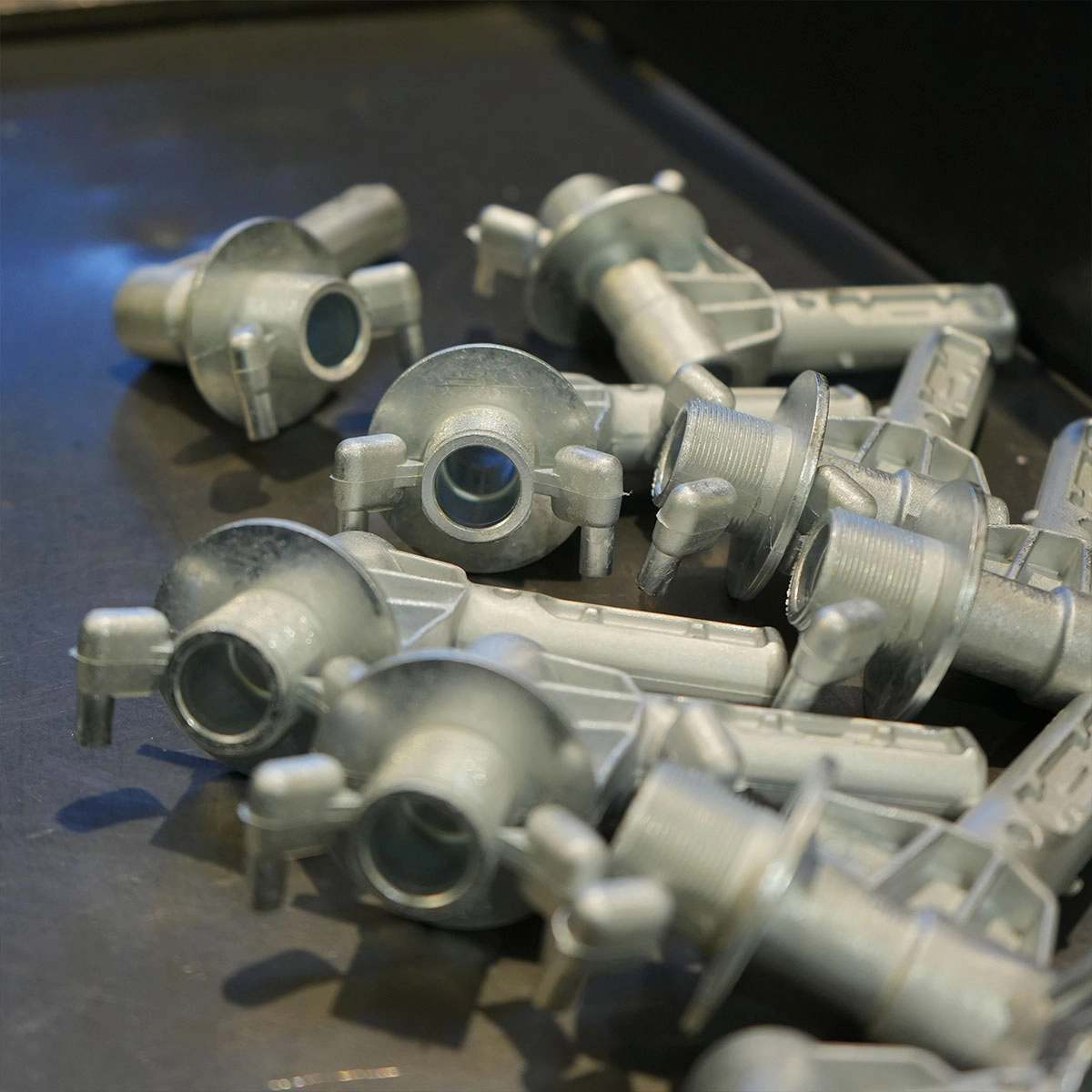
While mold design is a broad topic, one of the most relevant materials in this context is zamak, an alloy of zinc with aluminum, magnesium, and copper, which is widely used in die casting. Zamak is known for its versatility and its ability to produce high-precision and durable parts.
Zamak die casting has improved over time thanks to mold technology. This alloy has excellent fluidity, allowing for greater precision even in parts with complex geometry. Zamak molds are now more detailed and durable, capable of withstanding production cycles without losing quality.
In addition, controlled cooling and mold coatings have reduced wear, increasing mold life and reducing maintenance costs.
Trends in Industrial Mold Manufacturing
Current trends in industrial mold and tool design include:
Automation and Robotics
Advances in automation have made mold making faster and more precise. Industrial robots assist with loading, unloading, and real-time quality inspection, reducing errors and increasing efficiency.
Energy Optimization and Sustainability
Mold design is also adopting more sustainable practices.v The goal is to reduce energy consumption during the casting process and promote the use of recycled materials and more reusable molds.Modular Mold Design
Modular mold design offers greater flexibility, allowing molds to be adapted to different products without having to create new molds for each part. This reduces costs and speeds up production.

Impact on Various Industries
Advances in mold design have had a direct impact on various industries. In the automotive sector, for example, die-casting has enabled the production of lighter and stronger components, contributing to energy efficiency and reducing emissions. In the electronics industry, the ability to produce small, complex parts with great precision has led to the development of more advanced and compact devices.
In construction, molds made of zamak and other metals have allowed for the manufacture of more durable and customized structural elements, facilitating the creation of more efficient and aesthetically appealing buildings.
Conclusion
Industrial mold and tool design has evolved significantly, thanks to advances in 3D modeling, automation, and the use of innovative materials. These changes have made the molds more precise, efficient and versatile. Although zamak is only one of the materials used, it is a clear example of how metal alloys play a crucial role in industrial production. As technology continues to advance, we can expect new innovations that will make part manufacturing faster, more precise, and more sustainable.